
How to Prepare for Life After University 💡



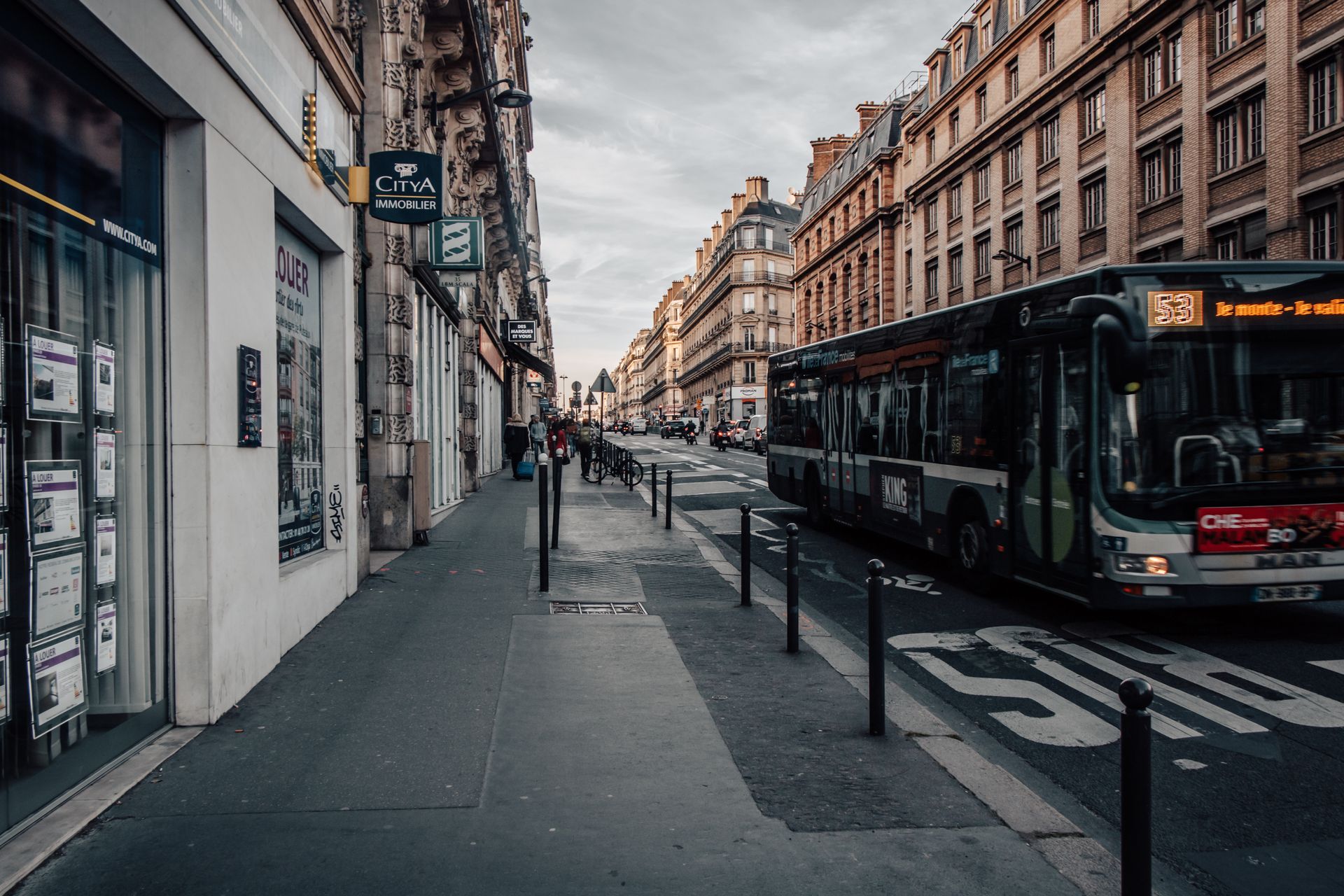
POV: You’ve just arrived in Paris for your studies. It’s the beginning of September, you want to explore everything… but with your huge suitcase in hand, you’ll very quickly need to take the metro or the RER. And standing in front of the ticket machine, the stress suddenly kicks in: Navigo? Imagine R? What’s that? Why can’t I just buy a single ticket? And why is everything so expensive?
Don’t panic — this article will show you the different options available to help you get around the City of Light without breaking the bank, and how to choose between the metro, RER, tram, bike, scooter, and more.
Let’s get started!
TLDR
- The Imagine R Student pass (€33/month) is the essential option: unlimited travel across the entire Île-de-France network, at almost one-third of the price of a full Navigo pass.
- The metro is fast but not very accessible. Lines 1 and 14 (fully automated) are not affected by strikes.
- The RER is quicker for longer journeys and allows bicycles outside peak hours.
- Cycling is often just as fast as the metro for trips under 5 km, and it’s your best ally during strikes.
- Vélib’ is convenient for backup trips, but stations empty quickly during rush hour.
- Walking: always free, always reliable, and often underestimated.
16 metro lines, more than 300 stations, 5 RER lines, 13 tram lines, around 350 bus routes, and 48 night bus lines.
As you’ve probably guessed, Paris has one of the densest public transport networks in Europe. You can get almost anywhere at any time — but at what cost?
First of all: the travel pass that changes everything.
If you live in the Île-de-France region and are under 26, your number one priority should be getting the Imagine R Student pass. It costs €392.30 for the 2026–2027 academic year, payable either in 9 monthly instalments of €42.70 or in one single payment. In return, you get unlimited travel across the entire Île-de-France network all year long: metro, RER, buses, and trams. That works out to around €33 per month (just over €1 a day!), which is almost three times cheaper than a full-price Navigo pass.
Unless your accommodation and university are right next to each other and you never need to travel elsewhere, you’ll probably need it.
But let’s start with the most important thing: everything you need to know as a student about the Paris metro.
The Paris metro has 16 lines, more than 300 stations, and runs daily from 5:30 a.m. to 1:15 a.m. (until 2:15 a.m. on Friday and Saturday nights). In theory, perfect. In practice, here’s what nobody really tells you:
The busiest stations during rush hour (8:00–9:30 a.m. and 5:30–7:30 p.m.) are Châtelet–Les Halles, Gare du Nord, Saint-Lazare, Montparnasse, and République. If you can avoid transferring there during those times, do it — the time and comfort you gain are significant.
Very important: since November 2025, paper tickets have disappeared from the network. You can no longer spontaneously buy a paper ticket; you must use either a Navigo pass or the Bonjour RATP mobile app, available on Android and iOS. If you haven’t subscribed to your Imagine R pass yet at the start of the academic year, load a Navigo Easy card in the meantime — you can add single tickets to it.
Another practical point: the Paris metro is not very accessible for people with reduced mobility. Fewer than 10% of stations have elevators. If you have heavy luggage or even a folding bike, the metro can also become complicated, regardless of the time of day.
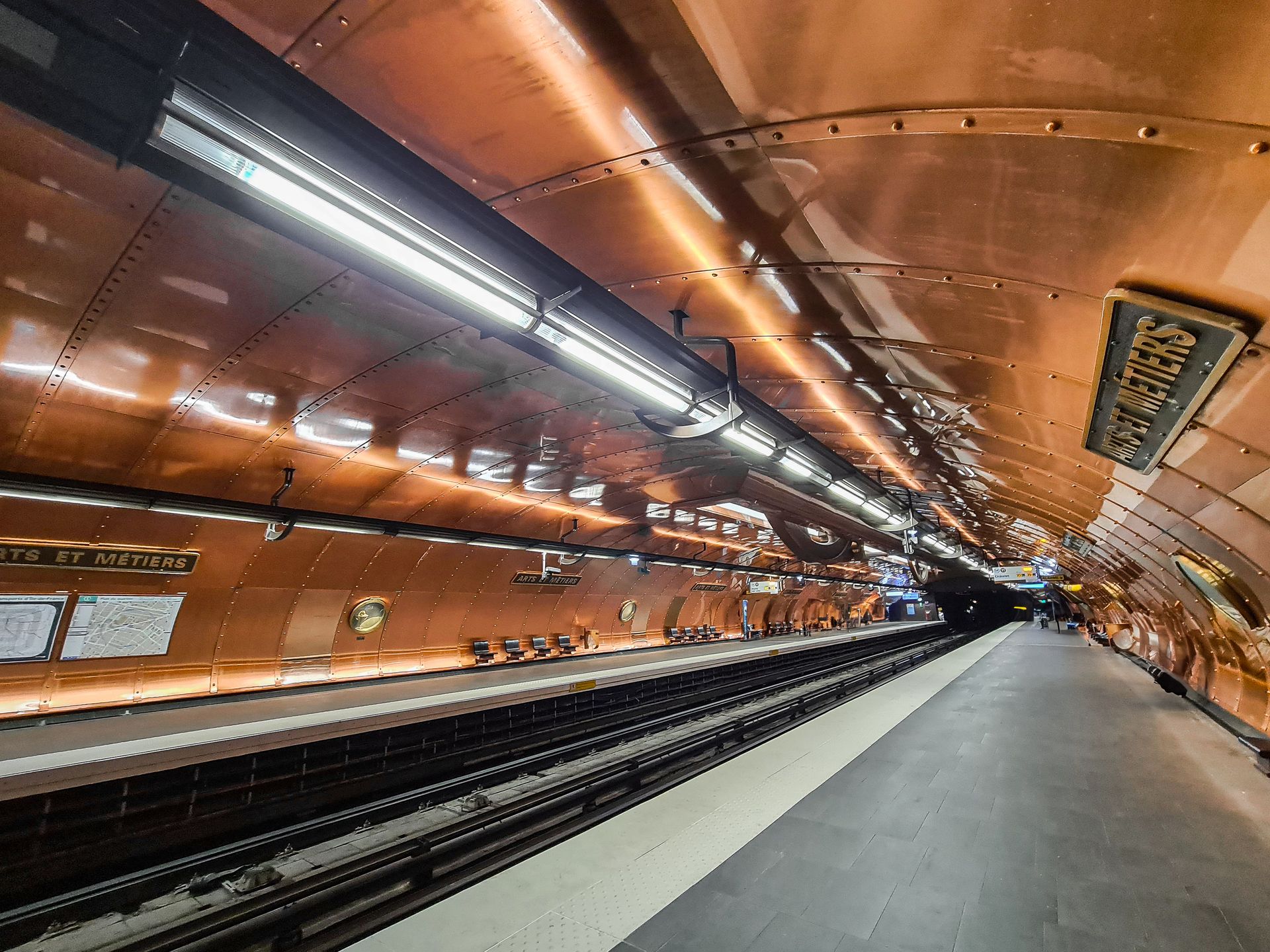
The RER is basically the metro — but faster, bigger, and sometimes more stressful. There are five lines (A, B, C, D, and E) that cross Paris and extend far into the suburbs. If your campus is outside central Paris, it will probably become your best ally. That’s the case for students at Paris-Saclay or IP Paris who live in Palaiseau: the RER B drops them directly on campus in just a few minutes.
What many students don’t realise is that within central Paris, the RER costs the same as a metro ticket. For example, if you want to go from Châtelet to La Défense, the RER A is often faster than Line 1 for exactly the same fare. Outside Paris, pricing changes depending on the travel zones, but with the Imagine R pass, you don’t need to worry about it. Otherwise, be careful — fines often exceed €50.
Another major advantage over the metro: you can take your bike on the RER, except during rush hours (6:30–9:00 a.m. and 4:30–7:30 p.m. on weekdays). It’s a huge plus if you like alternating between cycling and public transport depending on the weather.
The downside — and it’s a big one — is that lines B, C, and D are unfortunately famous for delays and disruptions. If you use them every day, always leave yourself a bit of extra time. And if your journey involves both the RER and the metro, that becomes even more important.
The tram may not be the fastest mode of transport, but it definitely has its advantages.
Its biggest strength is that it serves areas that are often poorly connected by the metro, especially the outer districts of the 13th, 14th, 15th, 19th, and 20th arrondissements. If you live in these neighborhoods — such as around the Paris Tolbiac residence — the tram can be a practical way to connect to an RER or metro line without having to walk 20 minutes.
The T3a and T3b are the most useful lines for students: they run along the Boulevards des Maréchaux from the south to the north-east of Paris, with frequent connections to the metro and RER. Modern, accessible for people with reduced mobility, and air-conditioned, trams are often much more comfortable than a crowded metro during summer. And you actually get to see the city.
The bus is the transport option people tend to underestimate — until they discover one that stops outside their home every four minutes and takes them directly to their destination.
Paris has around 350 daytime bus routes and 48 night bus lines (called Noctilien), which operate after the metro closes. If you’re out late and don’t want to pay for a taxi, the Noctilien is often your only option — and it’s included with the Imagine R pass.
Its main weakness is traffic: during rush hour, buses can get stuck and take twice as long as expected. Outside those busy times, though, they’re often a pleasant way to travel. You get to watch Paris pass by through the window, and it feels far less overwhelming than a packed metro carriage.
Métro | RER | Tram | Bus | |
Coverage | ⚡ Fast | ⚡⚡ Very fast | 🐢 Slow | 🐢 Variable |
Frequency | Excellent within Paris | Paris + suburbs | Outer Paris area | Everywhere |
Night service (after 1:30 a.m.) | ❌ | ❌ | ❌ | ✅ Noctilien |
Bikes allowed | ❌ | ✅(outside rush hour) | ❌ | ❌ |
Accessibility for reduced mobility | ❌ Limited | ⚠️ Partial | ✅ Good | ✅ Good |
Included with Imagine R | ✅ | ✅ | ✅ | ✅ |
Today, cycling in Paris is often just as fast as the metro for trips within the city, and sometimes only 10–20% slower for longer journeys. And during strikes, it’s often the only truly reliable option.
But before you jump on a bike, there are a few basic rules you should know.
Essential rules:
If you follow these rules, say goodbye to delays and hello to extra free exercise — and all the joys of cycling.
Without a doubt, owning your own bike is the most cost-effective option in the long run. A decent second-hand bike can be found from around €60 on platforms like Vinted or Leboncoin. Over a year of use, that works out to around €5 per month — hard to beat.
Add a good lock (absolutely essential in Paris — expect to spend at least €30–50 for a quality U-lock) and some lights (€15–20), and you’re ready to go. You can even learn how to repair your bike for free in dedicated community workshops.neighbourhoods
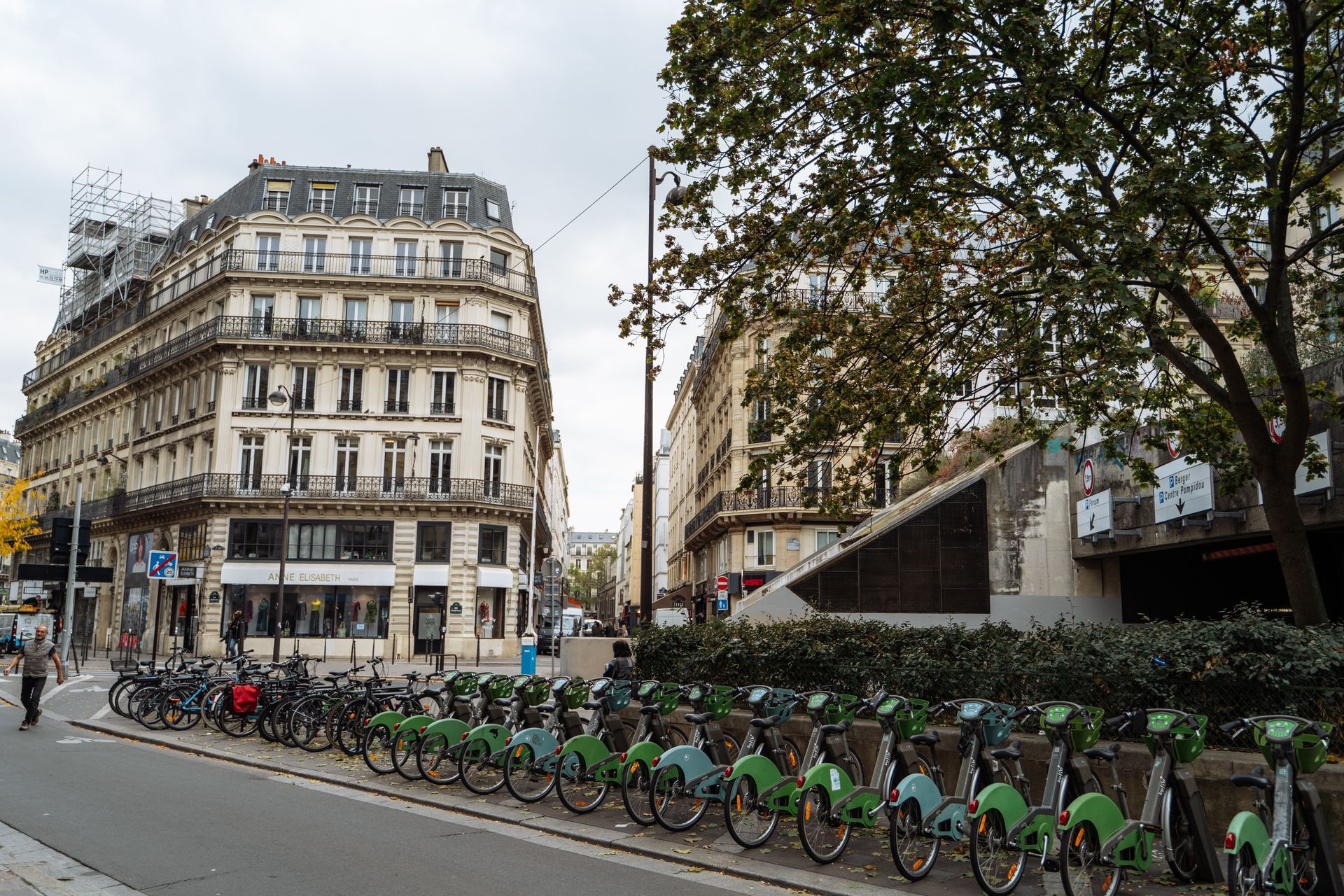
Vélib’ is Paris’ public bike-sharing system. There are more than 1,500 stations and 20,000 bikes, including electric ones. An annual subscription costs €37.20 for standard bikes (with unlimited 45-minute rides) and €57.20 with access to electric bikes, although electric rides come with additional per-minute charges.
That said, some neighbourhoods see their stations empty out very quickly during rush hour — especially hilly areas like Montmartre and Belleville, where stations are often saturated in the morning, as well as popular residential districts where bikes can disappear as early as 8:30 a.m.
If you plan to rely on Vélib’ to get to class every morning, make sure you have a backup plan.
Operators like Lime offer pay-per-minute electric bikes. They’re convenient in emergencies, but the prices add up quickly: expect to pay around €1 to unlock the bike, plus €0.25–0.30 per minute. A 20-minute ride can easily cost €6–7.
Useful occasionally, but definitely not ideal for everyday commuting.
The best mode of transport is often the one that starts right outside your door. Here’s a practical guide based on your Yugo residence.
Metro lines 14 and 7 are just around the corner — two of the most reliable and fastest lines in Paris. Line 14 is fully automated (which means no strike disruptions) and gets you to Saint-Lazare in just 15 minutes. For the city centre or the Left Bank, Line 7 is perfect. The neighbourhood is flat and well-equipped with bike lanes, making a personal bike an excellent investment here.
The RER B and metro lines 6 and 7 are nearby. The RER B gives direct access to both Charles de Gaulle Airport in the north and Paris-Saclay University and Polytechnique in the south. With Parc Montsouris right next door, cycling around the area is especially pleasant. The neighbourhood is flat and easy to navigate.
The Boucicaut, Lourmel, and Balard stations (Line 8) are all within walking distance. Line 8 takes you directly to Opéra or République. The RER C is also nearby for trips to Versailles or Austerlitz. The 15th arrondissement is one of the most enjoyable areas in Paris for cycling: spacious, airy, and full of bike lanes along the Seine.
Metro, tram, and bus connections are all just minutes away. The T3 tram runs nearby along the Boulevards des Maréchaux all the way to the 13th arrondissement. To reach Paris Cité (the closest university), cycling is often the fastest option.
The Montparnasse hub is one of the best-connected areas in Paris: metro lines 4, 6, 12, and 13, RER B and C, TGV trains, and buses are all available. You can reach almost anywhere in Paris in under 20 minutes. The area is fairly flat towards the south, although there are some hills heading back toward the city centre.
This is one of the best-connected areas in the entire Île-de-France region: RER A, metro Line 1 (fully automated and strike-free), RER E, Transilien L and U, and tram line T2. Central Paris is only about 10 minutes away. The only downside is that La Défense is built on a large elevated platform, making cycling less practical, especially when leaving the district. Metro and RER are generally the best daily options here.
Seven bus routes, three metro lines (3, 3bis, and 9), and an international bus station are all nearby. The area slopes slightly uphill from Paris — not dramatically, but enough to keep in mind if you’re planning to cycle. The residence also has a secure bike storage room, which is a real advantage.
The Pleyel district is undergoing major transformation thanks to the Grand Paris Express project. It’s already well connected by the RER D and the future Lines 15, 16, and 17, making Saint-Denis even more accessible by 2026–2027. Another plus: the area is mostly flat, ideal for cycling. The residence also includes bike storage facilities.
The RER B connects you directly to Paris in around 30–40 minutes. Palaiseau and Palaiseau-Villebon stations are nearby. The future Line 18 of the Grand Paris Express will further improve access to La Défense and Orly Airport. The Polytechnique and Paris-Saclay campuses are accessible by bike via dedicated cycling paths — the terrain is mostly flat and very pleasant to ride.
Metro Line 7 directly serves Ivry and continues all the way to La Courneuve. The RER C is also accessible. The area is flat and located along the Seine, with well-developed bike lanes into Paris. The distance to the city centre is relatively short (around 4–5 km).
The RER A is just nearby and takes you into Paris in 20–25 minutes, or to Disneyland in just a few minutes in the other direction. This is the most suburban of Yugo’s Paris residences, but transport links are still very good and the surroundings are greener and calmer. Cycling works well around campus, although less so for getting directly into Paris.
People often forget it, but Paris is an extremely walkable city. Many journeys within the city that are under 2–3 km can be just as fast on foot as by metro once you factor in transfers, platforms, and waiting times.
It’s free, reliable, good for your health, and most importantly, it’s the only transport option that doesn’t depend on the RATP, the weather, or the battery level of a Vélib’. In the event of a major transport strike and if you don’t own a bike, walking is often your best solution for trips under 5 km.
But for that, you first need to know where you’ll be living. Take a look at our Yugo residence map to find the accommodation that suits you best.

Explore Paris like a student, from free museums and historic neighbourhoods to affordable food, parks and nightlife, all while making the most of your budget.
How much money do you really need to study in Paris in 2026? This guide reviews every expense category, with up‑to‑date figures and practical tips to help you stay on budget.
Explore Paris like a true insider—from €4 meals and free museum visits to budget-friendly student neighborhoods and smart housing hacks.
Discover the best of French higher education with top universities and English-taught programmes.
Finding student accommodation in France requires organisation, anticipation, and the right information. Options are available—you just need to know where to look...