
How to Prepare for Life After University 💡




Erasmus in Florence can be amazing, especially if you know what to expect before you arrive. The city is small, busy and often crowded around places like the Duomo, Santa Croce and Ponte Vecchio. Still, it has a rhythm students quickly get used to: walking to class, grabbing lunch at a market, meeting friends in a piazza and getting almost anywhere without needing a metro.
This guide gives you a practical overview of Erasmus in Florence: which universities welcome exchange students, which neighbourhoods are worth considering and how much to budget each month.
Several universities and schools in Florence welcome Erasmus and exchange students, but the experience can change a lot depending on where you go.
Some campuses are closer to the centre; others are further out. Some courses are mainly in Italian, while others are built around international students. That's why it's worth checking this early: your university will affect where you live, how much Italian you'll use and the kind of student life you'll have.

For many exchange students, the University of Florence, or UniFI, is the first name that comes up. It's the city's main public university and welcomes Erasmus students across a wide range of subjects, from architecture and engineering to economics, law, humanities, medicine and political science.
One thing to know before you arrive: UniFI doesn't work like a single campus university. Its departments are spread around the city, so where you study can really shape your daily routine.
If you're in economics or law, you'll probably spend a lot of time around Novoli, north-west of the centre. Humanities and social sciences are closer to the historic centre, while science students may need to travel out towards Sesto Fiorentino.
Most teaching is in Italian. Some programmes and courses are available in English, but you'll normally need to show a B2 English certificate during the nomination process. Even if your classes are in English, a bit of Italian will make life much easier, especially when you're sorting out housing, dealing with offices, shopping or just trying to understand how things work day to day.

IED Florence, the Istituto Europeo di Design, is part of an international network of design schools across Europe and Latin America. Its Florence campus accepts Erasmus students for one semester at a time, with an autumn intake from September to February and a spring intake from February to July.
Programmes focus mainly on fashion design, interior design, graphic design, visual arts and creative disciplines. Compared with UniFI, the environment is more compact, and the student groups are smaller, which can make it easier to meet people and build connections quickly.
Your home university must send the nomination to IED by 15 May for the autumn semester or 15 October for the spring semester. Applications are then usually completed within two weeks.
The central location is also a big advantage, as you'll be within walking distance of many of Florence's main streets, markets and cultural spots.

Florence is also full of smaller art, design and humanities schools, many of them linked to study-abroad programmes from North American universities. SACI, Studio Arts Centers International, is one example, with courses in studio arts, art history, conservation and related fields.
These schools usually feel very different from a large Italian university. Classes are smaller, teaching is often in English, and the support can be more structured, especially for students spending only a semester or a year in Italy.
The best part is how closely the courses are tied to the city. You might study in a studio one day, then visit a museum, church, archive or workshop the next.
The only thing to keep in mind is the social side. Because these programmes are often built around international students, you may need to make a more active effort to meet Italian students outside classes.
Finding accommodation in Florence is often the part students underestimate the most. The city is small, popular and in high demand, so good rooms tend to go quickly.
The good news is that once you move away from the most central streets, Florence has real neighbourhoods with a more local feel and more realistic prices.
🎒 Start your search early
Don't wait until your Erasmus acceptance letter arrives to start looking for accommodation. Florence's rental market, especially for furnished rooms in shared flats, gets busy between April and June for students arriving in autumn.
If you're moving to Florence in September, it's worth starting your search around March. This gives you more choice and helps you avoid last-minute options that are either too expensive or badly located.
Rifredi and Novoli are popular areas for UniFI students, and for good reason. Several faculties, including economics and law, are based in Novoli, so living nearby can make your daily commute much easier.
Rifredi also has its own train station, reliable bus connections and a much more residential feel than the city centre. Rents are usually lower, with a mix of Italian families, workers and students living in the area.
That makes it a good option if you want to practise your Italian and see a side of Florence that feels more local than the historic centre.
Sant'Ambrogio is one of the most liveable areas close to the historic centre. It still feels local, especially around the market in Piazza Ghiberti, where residents shop during the week.
Campo di Marte, a little further east, is quieter and more residential. It has good connections to the centre by bus or bike, and it can be a good option if you want to stay close to the city without living in the busiest streets.
Both areas offer a balanced mix of students, families and long-term residents, which makes daily life feel less tourist-focused.

South of the Arno, Oltrarno is one of Florence's most characterful neighbourhoods. It's known for artisan workshops, independent bookshops, small studios, local cafés and wine bars that attract more Florentines than tourists.
Rents are usually higher than in Rifredi or Novoli, but often still more manageable than in the most central parts of the city. If you're studying art, design, fashion, architecture or humanities, Oltrarno can be especially appealing because the neighbourhood itself feels closely connected to Florence's creative identity.
It's a good choice if you want to be immersed in a part of the city that feels authentic, lively and local.
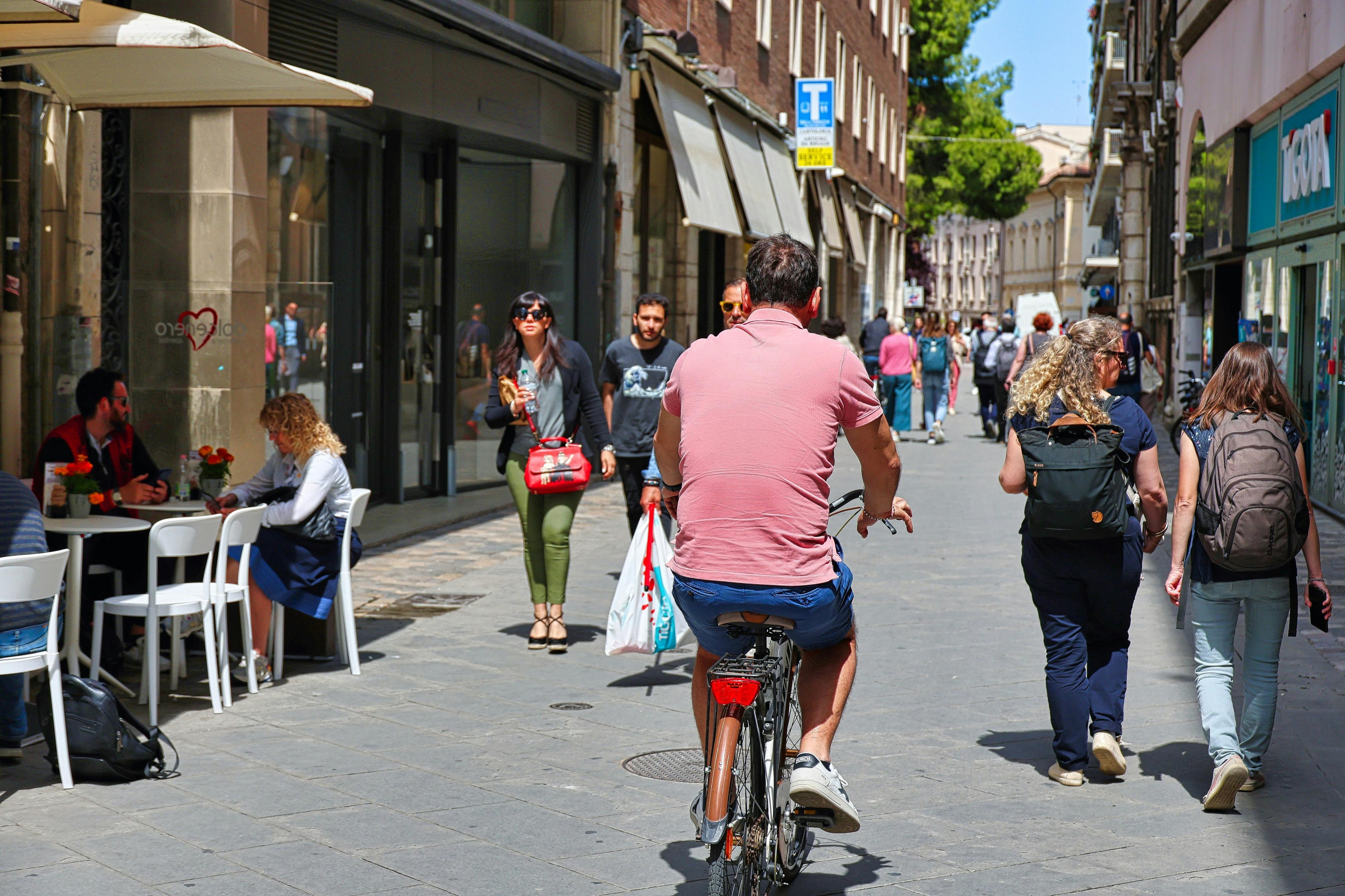
Living in the Centro Storico sounds tempting at first. You're close to the Duomo, the main university buildings, cafés, shops and plenty of places to go out. For the first few days, it can feel like the perfect choice.
After a while, though, the downsides become clearer. Rents are usually higher, the streets can be noisy and many flats are aimed more at short stays than students staying for a full semester. You also have to deal with crowds almost every day, especially around the main tourist routes.
For most Erasmus students, the historic centre works better as a place to meet friends, explore and go out, rather than somewhere to live day to day.
👉 Not sure whether to choose student accommodation or a private flat? Read the benefits of living off-campus before you decide.
Yugo has three residences in Florence, designed to make the move easier from the very beginning. For Erasmus students, this can remove a lot of the usual stress that comes with finding accommodation in a new city.
You can book your room before you arrive, move into a furnished space and know from day one that bills are included in the rent. That means no separate contracts for water, electricity or internet, and no need to chase a landlord in Italian a few weeks into your exchange.
There is also an on-site team available if you need support, which can make a real difference when you're still finding your way around the city.
For students arriving in Florence for the first time, the practical benefit is simple: your accommodation is already sorted, so you can focus on settling in, meeting people and starting your Erasmus experience.
📍See Yugo residences in Florence
Florence is usually more expensive than Bologna or Padua, but still cheaper than Milan. For most Erasmus students, a realistic monthly budget sits between €1,000 and €1,300, depending mainly on where you live, how often you eat out and how much you travel.
Here's what that looks like in practice:
Expense | Low end | High end | Notes |
Accommodation (room in shared flat) | €400 | €700 | Lower in Rifredi or Novoli, higher near the centre |
Groceries | €150 | €280 | Local markets like Sant'Ambrogio can help keep costs down |
Eating out | €60 | €150 | Local trattorias often offer a full lunch for around €10–15 |
Public transport | €23 | €35 | Student monthly passes are usually cheaper than standard tickets |
Phone and internet | €10 | €20 | Italian SIM cards are affordable, so it's worth getting one early |
Social life and culture | €50 | €120 | Many museums and cultural sites offer student discounts |
Your Erasmus grant will help cover part of these costs, but it usually won't pay for everything. The exact amount depends on your home country and university, though most students receive around €200-€500 per month.
That's why it's worth planning your budget before you arrive. Knowing how much rent, food, transport and social life are likely to cost makes it easier to enjoy Florence without constant money stress.
👉 Want to make your Erasmus budget go further? Student money saving tips covers the essentials.
Daily life in Florence is beautiful, but it can take a little time to understand how the city works. A few things often surprise Erasmus students in the first weeks, so it's useful to know what to expect before you arrive.
Florence welcomes millions of visitors every year. The Uffizi, the Duomo, Ponte Vecchio and the main streets around them are incredible, but they can also be very crowded, especially from March to October.
The students who settle in fastest usually learn how to move around the tourist routes rather than through them. Often, the streets just one block away from the main attractions are quieter, cheaper and more local. That's where Florence starts to feel like a real place to live, not just a city to visit.
In Italy, you'll need a codice fiscale, a tax identification number, for many practical things: opening a bank account, getting a SIM card, registering with a doctor or signing a rental contract.
Try to sort this out during your first week. Your university's international office can usually guide you, and in many cases the process is fairly quick at the local tax office, the Agenzia delle Entrate.
If you're a non-EU student, you'll also need to apply for a permesso di soggiorno within eight working days of arrival. This can feel confusing at first, but your university's welcome service should help you through the steps.
English is common in tourist areas, but daily life in Florence mostly runs in Italian. You'll use it in supermarkets, local cafés, public offices, doctors' surgeries and when dealing with landlords.
You don't need to be fluent before you arrive, but even a basic A2 or B1 level can make everyday life much easier. It helps you feel more independent, understand local routines and settle in faster.
UniFI also offers a free Italian language course for incoming Erasmus students through its language centre. It's worth taking them, even if your university courses are in English.
The Erasmus social scene in Florence is active and it's easy to spend most of your time with other international students. There's nothing wrong with that, especially at the beginning, when everyone is trying to find their place.
But Florence becomes much more interesting when you also make an effort to meet Italian students and local residents. University clubs, language exchanges, volunteering and small local events are all good ways to build connections outside the Erasmus bubble.
Arriving in a new city and having to search for a room straight away can make the first few weeks unnecessarily stressful. For Erasmus students in Florence, Yugo helps make that part much easier.
Your room is ready when you arrive, bills are included and you'll already be part of a student community from day one. That means less time dealing with contracts, utilities and last-minute housing stress.
With Yugo, you get:
📍Find your Yugo home in Florence